
 NIS2 READY

Not every ambassador for a technology platform is also a Slovak marathon champion. Martin Rusina connects two worlds that may seem completely different at first glance – elite endurance sport and the world of IT projects and cybersecurity. Yet they share the same foundations: discipline, systematic work, long-term goals, and continuous improvement.
We spoke with Martin about how he got into sport, his greatest achievements, his work in IT, what long-distance running teaches you, and why he became an ambassador for Tazilla – CISO as a Service. Along the way, our conversation moves from sport and working life to the parallels between running and managing cybersecurity.
Question: Martin, how did your sporting career begin?
Martin Rusina: My start was a little unconventional – I didn’t begin with running. I was a cyclist first. My uncle and my brother were the main reason I got into it. They weren’t professionals, but they started riding mountain and road bikes and competing a little as well.
My brother is 12 years older than me and took racing more seriously. I looked up to him, so I started cycling too.
During the COVID-19 pandemic, when the borders were closed, I started running. When races resumed, I entered my first race, achieved a good result, and began taking running more seriously. I finished second in my first race, which was a fantastic result. That was when I told myself I was going to start running properly.
Question: When did you realize that running could become something more serious for you?
Martin Rusina: Right at the beginning. After one of my first runs, people from the Bratislava Marathon Sport Club noticed me. Within about a week, I was already running my first race for them.
It was the Slovak Half Marathon Championships, and I finished third. That was a major achievement for me. When I compared myself with the competition, I realized I wanted to take running seriously and commit to it fully.
Question: Which achievement means the most to you?
Martin Rusina: Paradoxically, it isn’t my fastest time or even my biggest victory.
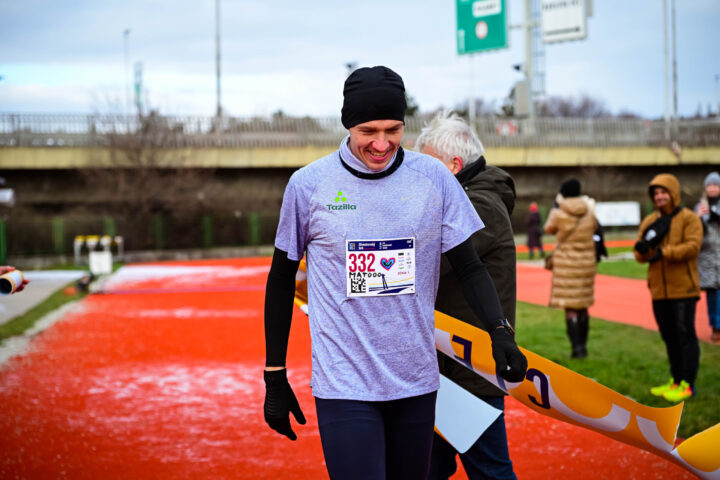
I ran the Slovak Half Marathon Championships in Bratislava. I felt really good that day and was smiling throughout the race. The conditions were difficult and the competition was strong, but I managed to win.
My parents were there, and when I crossed the finish line, I hugged everyone. My siblings and the rest of my family were there too. That is the moment I value the most.
Question from a fan: When will you run a marathon in under 2 hours and 10 minutes?
Martin Rusina: The Slovak marathon record is just under 2 hours and 10 minutes, and it was set by a professional athlete who had been running since childhood.
So I assume that is unrealistic for me, because I’m not a professional athlete who started training from a young age.
My current personal best is 2:17:44. With my current setup, balancing training with work and everything else, I think I could get down to around 2 hours and 14 minutes.
Maybe if I approached it fully professionally and focused only on running, it could be possible.
Question: What do you think about when you run?
Martin Rusina: When I go out for a 60-minute run, just about everything goes through my head.
A lot of it is about situations at work that I could have handled better, everyday things, or what I still need to do.
My first marathon was completely different. That was awful. Everything was running through my mind, and those two hours felt like real suffering. I think you could probably write a whole book about everything that went through my head.
Question: Do you listen to music while running?
Martin Rusina: On easy runs, yes, I listen to music.
But during harder sessions, I don’t, because you need to listen to your body – how you are running, how you feel, and whether you are starting to push yourself beyond the limit.
Question: What has been your most extreme sporting experience?
Martin Rusina: When I was still running fewer kilometres, I once entered a trail race of more than 30 kilometres.
It was in the Orava region, through the mountains, with huge elevation gain. I really wasn’t prepared for it, and by the time I reached the finish I was running on empty.
But when I arrived, the finish area had not even been set up yet. Nobody was there.
A phone was part of the mandatory equipment, so I called the organiser and asked where everyone was.
That was when I found out that I had arrived before they had managed to set up the finish line. They were not expecting the first runner for another hour.
That was definitely a memorable experience.
Question: Which of your personal qualities do you value most?
Martin Rusina: I would probably say discipline and perseverance.
I’m competitive. I like comparing myself with others. I race because I like winning. I like competing and I want to be first and the best at everything.
Question: Do you have a favourite motto?
Martin Rusina: Yes, and I say it during training as well:
Pain is temporary. Glory is forever.
Question: How do you combine working in an IT company with running?
Martin Rusina: It’s complicated, because when you have fixed working hours, it is genuinely difficult to run both in the morning and in the evening.
But you need willpower and discipline.
You set your alarm, go for a run, get to work by 8:00, finish your working day, go home, and then go running again. There really isn’t another way.
As a project manager, I plan my tasks carefully and I need to stay disciplined even when I don’t feel like it.
Question: What does Martin Rusina do when he isn’t training or working?
Martin Rusina: There really isn’t much time left.
If you consider that running takes an hour in the morning and another hour in the afternoon, and then there is an eight-hour working day, there isn’t much time remaining.
A professional athlete should also sleep eight hours, so that reduces it even further.
Then there is cooking, spending time with family and my girlfriend, relaxing, going to the sauna and similar things. In one way or another, almost everything is connected to running and recovery.
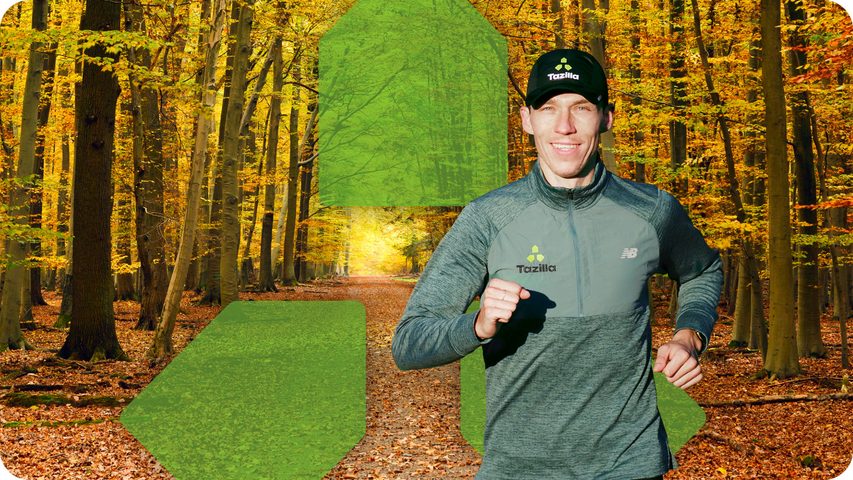
Question: You are an ambassador for Tazilla – CISO as a Service. Do you see any parallels between running and cybersecurity management?
Martin Rusina: As a long-distance runner, I definitely see a connection.
Cybersecurity constantly evolves, changes and improves over time. It doesn’t work in a way where you do something once and then consider the job finished.
It’s the same with running. You cannot simply train once and expect that to be enough.
You have to train continuously and keep working on it.
That is where I see the connection: discipline and perseverance.
Question: What are your plans after your competitive running career?
Martin Rusina: I have worked with several coaches, both from Slovakia and abroad, and I have learned a lot from them.
I also completed a coaching course, so I am a certified coach.
I currently coach my own women’s running group, and I believe that in the future I will continue coaching my own running group.
So I don’t plan to leave running behind. I would like to stay involved as a coach.
Question: What would you wish for Tazilla, a platform you’ve also helped to build and develop?
Martin Rusina: A lot of success and a lot of customers.
But again, if I connect it with running, it comes back to perseverance and discipline.
I hope it will not be just a solution for today, but something that lasts for a very long time. I hope it helps companies and contributes to improving the whole cybersecurity environment.
Of course, it also needs to keep evolving and improving over time.
And maybe one day we’ll become the next Microsoft!

At first glance, marathons and cybersecurity may appear to have very little in common. But as Martin Rusina points out, both depend on long-term discipline, systematic work, and continuous improvement.
You cannot win a marathon after a single training session, and cybersecurity cannot be solved through a single project.
Both are long-distance challenges.
Tazilla was also created to help organizations manage cybersecurity systematically over the long term rather than through one-off activities.
That is why the connection with endurance sport – and with the discipline represented by Martin Rusina – feels completely natural.
Just like in a marathon running, efective cybersecurity management requires endurance, discipline, and the ability to think ahead. These are the values that connect Martin Rusina and Tazilla.